All published articles of this journal are available on ScienceDirect.

Effects of Hot and Cold Environments in Team Sports: A Narrative Review of Physiological Consequences, Performance Implications, and Mitigation Strategies
 iD
Sergiu V. Lazau2
iD
Mariangela Peruzzi5 , 6
iD
Giacomo Frati1 , 7
iD
Luigi Sciarra8
iD
Elena Cavarretta1 , 9
iD
Fabrizio Perroni2
iD
Authors Info & Affiliations
Abstract
Introduction
Team-sport athletes compete across diverse thermal environments that can alter physiological, neuromuscular, cognitive, and perceptual responses. Because intermittent match play is shaped by pacing, tactics, substitutions, position, and recovery opportunities, evidence from continuous exercise cannot be directly extrapolated to team sports. This review summarizes the effects of hot and cold environments and evaluates practical mitigation strategies.
Methods
A structured search of PubMed, Web of Science, and ResearchGate identified English-language original studies, systematic reviews, meta-analyses, and position statements addressing environmental stress, physiological responses, performance, athlete safety, and mitigation strategies relevant to team sports.
Results
Exposure to heat increases cardiovascular and perceptual strain, dehydration, neuromuscular fatigue, and cognitive impairment, although match-performance effects vary with humidity, environmental severity, acclimatization, pacing, tactical behaviour, and competition demands. Cold exposure may impair muscle function, agility, dexterity, and cognitive performance and may increase the risk of dehydration, particularly during periods of inactivity, substitutions, and exposure to windy or wet conditions. Heat acclimation, individualized hydration, and appropriately timed cooling have the strongest practical support, whereas hyperhydration remains context-dependent. In cold conditions, layered clothing, optimized warm-up and re-warm-up, hydration, nutrition, and protection for substitute players are recommended, although team-sport-specific evidence is limited.
Discussion
Environmental effects on team-sport performance are context-dependent and reflect interactions among climatic, physiological, behavioural, and sport-specific factors; laboratory findings should therefore be translated cautiously to competition.
Conclusion
Environmental stress should be integrated into preparation, monitoring, medical management, and tactical planning using individualized, sport-specific, multidisciplinary strategies to preserve performance and reduce health risks.
1. INTRODUCTION
Team sports, such as soccer, hockey, rugby, basketball, and American football, are stop-and-go sports characterized by alternating high- and low-intensity activities and other physically and technically demanding actions (e.g., jumping, turning, tackling, kicking, and throwing) [1]. These sports are generally classified as mixed sports because they combine prolonged exercise with repeated brief bouts of near-maximal effort. For instance, elite soccer is characterized by substantial match demands, involving prolonged activity interspersed with repeated high-intensity efforts [2]. Moreover, many team sports are played outdoors, exposing athletes to variable environmental conditions (including ambient temperature, relative humidity, solar radiation, wind, and air pollution). Environmental conditions can substantially influence both physiological responses and team-sport performance [3, 4]. Consequently, team-sport performance depends not only on physical capacities (e.g., cardiorespiratory fitness, muscular strength, endurance, speed, agility, and flexibility), but also on the athletes’ ability to respond and adapt to environmental stressors. Team-sport athletes must also sustain high cognitive and decision-making demands, select appropriate tactical responses, and execute technical skills, all of which may be adversely affected by heat stress during prolonged high-intensity intermittent exercise [5]. These challenges may be further amplified during international tournaments and congested competition schedules, when limited recovery time between matches may increase fatigue and impair perceived recovery [6].
Exposure to hot and humid environments increases cardiovascular (CV), respiratory, metabolic, and perceptual responses, leading to greater thermal strain and potentially reducing performance through an earlier onset of fatigue or self-selected reductions in exercise intensity [7]. For example, in professional baseball, extremely hot ambient conditions (>34 °C) have been associated with changes in offensive performance metrics, including higher slugging percentages and a higher frequency of home runs. However, these findings likely reflect reduced pitching effectiveness rather than improved batting performance [8]. Similarly, in soccer, air temperatures above 22 °C combined with relative humidity exceeding 60%, or temperatures above 28 °C even under lower humidity, have been associated with reduced sprint performance and lower total distance covered during matches [7, 9]. Konefał et al. [7] further reported that soccer players covered greater total distances and performed more sprints under thermally neutral (9–26 °C) conditions than under heat-stress conditions (>26 °C).
Cold environments also represent an important challenge for team-sport athletes. Soccer, rugby, and American football are routinely played outdoors in temperate and cold climates during the winter season, occasionally exposing athletes to sub-zero temperatures, strong winds, and precipitation. Extreme examples include the 1967 National Football League (NFL) Championship “Ice Bowl”, which was played at an air temperature of approximately -25 °C, and National Hockey League outdoor games, which have been staged across a wide range of environmental temperatures [10]. Although these conditions are not representative of most competitions, they illustrate the considerable thermal variability that team-sport athletes may encounter. Cold exposure may reduce skin, muscle, and core temperatures, potentially impairing muscle strength, power output, and repeated high-intensity exercise [11]. However, evidence from elite soccer indicates that overall match-running performance is generally preserved, with only subtle changes in the distribution of high-intensity efforts [12].
Understanding the effects of hot and cold environments on team-sport performance is a topic of considerable current interest. A notable example is the Fédération Internationale de Football Association (FIFA) World Cup, which is usually played from mid-June to mid-July; however, the 2022 edition in Qatar was exceptionally held from mid-November to mid-December because of the host country’s extreme environmental conditions, with ambient temperatures potentially exceeding 45 °C and perceived temperatures may surpass 50 °C under high humidity. Similarly, international competitions such as the Major League Soccer (MLS) Championships, the 2026 FIFA World Cup (held across Canada, Mexico, and the United States of America), and the NFL expose athletes to markedly different climatic conditions, ranging from subtropical to subarctic environments. In the NFL, teams based in colder climates have been shown to achieve a greater home-field advantage during winter months than the league average, suggesting that chronic adaptation to cold environments may confer a competitive advantage [13]. More recently, game-day temperature has also been identified as a predictor of match outcomes when teams from different climatic backgrounds compete, highlighting the importance of thermal habituation and environmental familiarity in team-sport performance [13, 14]. These observations suggest that environmental familiarity, thermal habituation, and sport-specific preparation may influence competitive performance.
Although previous reviews have comprehensively examined the effects of heat stress, hydration, or cold exposure on exercise performance, they have generally focused on a single environmental condition, specific physiological mechanisms, or individual sports. Reviews specifically addressing team sports have mainly focused on heat exposure, particularly in soccer, whereas evidence regarding cold environments and their practical implications for team sports remains fragmented. Moreover, previous reviews have not comprehensively integrated the effects of hot and cold environments across team sports, considering physiological responses, performance outcomes, and practical mitigation strategies. A comprehensive and up-to-date synthesis of the available evidence is therefore warranted.
The aim of this narrative review was to summarize the effects of hot and cold environments on team-sport performance, explain the underlying physiological mechanisms, and discuss practical strategies and future research priorities for preserving performance and protecting athletes’ health. Relevant literature was identified through a structured search of PubMed, Web of Science, and ResearchGate using combinations of terms related to environmental stress, team sports, performance, physiological responses, acclimatization, and hydration. The search strategy included the following terms: (“heat” OR “hot environment” OR “cold” OR “cold exposure” OR “humidity” OR “thermal stress”) AND (“team sports” OR “soccer” OR “football” OR “rugby” OR “basketball” OR “hockey”) AND (“performance” OR “exercise” OR “physiological adaptation” OR “acclimatization” OR “hydration”). Original research articles, systematic reviews, meta-analyses, and position statements published in English were considered if they addressed the effects of hot and cold environments on physiological responses, performance, athlete safety, or mitigation strategies relevant to team-sport athletes. Studies focusing exclusively on individual endurance sports or not directly related to exercise performance under thermal stress were excluded. Studies were selected based on their methodological quality, scientific relevance, and contribution to the objectives of this narrative review.
1.1. Exercise in Hot Environments
Exercise performed in hot environments imposes substantial physiological strain, impairing physical and cognitive performance and increasing the risk of exertional heat illness [15]. The magnitude of thermal stress depends on multiple interacting factors, including exercise type, intensity and duration, ambient temperature, relative humidity, solar radiation, wind speed, clothing, hydration status, heat acclimation, and individual characteristics such as aerobic fitness, body composition, body surface area, sex, and age [15]. Environmental heat also impairs cognitive functions essential for team sports, including attention, information processing speed, executive function, and decision-making, thereby increasing the likelihood of tactical and technical errors [15-17]. Individual characteristics further influence thermoregulatory capacity. Greater aerobic fitness is associated with higher cardiac output, earlier sweating onset, greater sweat rates for a given core temperature, and larger plasma volume, whereas a higher body surface-area-to-mass ratio enhances convective and evaporative heat loss, reducing the rate of body heat storage under comparable environmental conditions [15, 18]. These adaptations improve heat dissipation and reduce cardiovascular strain during prolonged exercise in the heat, although they do not completely prevent hyperthermia under severe environmental conditions [15, 18].
Skeletal muscle contraction is relatively inefficient from a thermodynamic perspective. Most of the metabolic energy generated during exercise is therefore converted into heat, while only a smaller proportion (approximately 20–25%) contributes to external mechanical work. Consequently, core temperature progressively increases even under temperate conditions, making efficient heat dissipation essential for maintaining physiological homeostasis and exercise performance [15, 18]. During the early stages of exercise, CV function generally remains stable, allowing adequate skeletal muscle perfusion despite increasing heat production. As thermal strain progresses, rising body temperature stimulates cutaneous vasodilation and sweating, promoting heat transfer from the core to the skin while increasing competition for blood flow between the skin and exercising muscles [15]. The resulting redistribution of blood toward the skin reduces venous return, central blood volume, and left ventricular preload. Stroke volume progressively declines, requiring a compensatory increase in heart rate (HR) to maintain cardiac output. Athletes with greater aerobic fitness generally tolerate these CV adjustments more effectively because of their larger plasma volume and greater cardiac reserve [15]. At moderate-to-high exercise intensities, these compensatory responses generally maintain skeletal muscle perfusion despite the competing demands of thermoregulation. However, as thermal strain and dehydration progress, cardiovascular strain increases, oxygen delivery to the active musculature declines, and maximal aerobic capacity is progressively reduced. The decline in the maximal oxygen uptake (VO2max) is accompanied by greater perceived exertion, increased carbohydrate utilisation, accelerated glycogenolysis, and greater reliance on anaerobic metabolism, ultimately shortening time to exhaustion during prolonged exercise in the heat [15]. Rather than reflecting physiological failure, the progressive reduction in exercise intensity commonly observed in athletes during prolonged exercise in the heat is now considered a protective behavioural and physiological response that limits metabolic heat production, reduces further heat storage, and preserves CV [15]. Prolonged exercise under these conditions is associated with progressive dehydration and increased plasma osmolality, creating a vicious cycle that further impairs skin blood flow, sweating efficiency, CV function, and heat dissipation, thereby accelerating fatigue when fluid losses are not adequately replaced [15, 19]. Progressive hypovolaemia further reduces central blood volume and ventricular filling, amplifying the decline in stroke volume (SV) and CV stability during protracted physical exertion [15]. Although body mass losses of approximately 2% or more have traditionally been considered detrimental to physical and cognitive performance, current evidence indicates that no universal dehydration threshold exists. The physiological consequences of hypohydration depend on environmental conditions, exercise characteristics, heat acclimation, fluid availability, and substantial inter-individual variability [15, 19, 20]. Consequently, hydration strategies should be individualized rather than based on fixed percentages of body mass loss [15, 20].
Beyond CV limitations, prolonged hyperthermia directly compromises skeletal muscle function. Elevated muscle temperature and the accumulation of metabolic by-products contribute to peripheral fatigue by reducing muscle excitability and impairing excitation–contraction coupling, thereby decreasing force production. Concurrently, the reduction in aerobic capacity promotes greater carbohydrate utilisation, accelerated glycogenolysis, and increased reliance on anaerobic metabolism, hastening substrate depletion during prolonged exercise [15, 21].
Heat stress also affects the central nervous system and cognitive functions essential for team-sport performance, including attention, executive function, working memory, information processing speed, reaction time, and decision-making, thereby increasing the likelihood of technical and tactical errors [5, 17]. These effects result from rising brain temperature and reduced cerebral perfusion, which alter neural activity [15, 18, 21, 22]. Electroencephalographic studies further demonstrate progressive alterations in cortical activity during exercise-induced hyperthermia, supporting the contribution of central fatigue to the reduced voluntary activation of exercising muscles [21]. These central and peripheral mechanisms interact with CV strain to increase perceived exertion and progressively reduce voluntary exercise intensity; this reduction is now considered an important protective strategy that limits further metabolic heat production and excessive heat storage [15, 18].
For team-sport athletes, these responses compromise not only physical capacity but also the ability to repeatedly perform technically demanding actions and make rapid, accurate decisions under physiological stress. Consequently, competition in hot environments is often associated with reduced technical precision, tactical efficiency, and overall match performance despite the preservation of decisive high-intensity actions during critical phases of play [17, 23, 24].
Although the physiological mechanisms underlying heat strain are well established, their practical consequences vary according to environmental conditions and the intermittent nature of team sports. Distinguishing between hot-dry and hot-humid environments therefore provides a useful framework for understanding differences in thermoregulation, physiological responses, cognitive function, and exercise performance [15, 25].
1.1.1. Hot-Dry Environments
Hot-dry environments are characterized by high ambient temperatures and low relative humidity, conditions that favor evaporative heat loss because of the large vapor pressure gradient between the skin and the surrounding air [15, 26]. Compared with humid environments, more efficient sweat evaporation initially limits increases in skin and core temperature despite high ambient temperatures. However, this thermoregulatory advantage is accompanied by markedly elevated sweat rates, which may exceed 2–3 L·h−1 in highly trained athletes during prolonged exercise, leading to substantial water and electrolyte losses if fluid replacement is inadequate [15, 27]. A distinctive feature of hot-dry environments is that sweat evaporates rapidly and often does not accumulate visibly on the skin despite substantial fluid losses. Athletes may therefore underestimate sweat losses and delay fluid replacement during training and competition [15, 27]. Individualized hydration strategies based on measured sweat rates, sweat sodium concentration, and anticipated fluid losses are therefore particularly important in hot-dry climates to minimize dehydration and preserve physiological function during prolonged exercise [15, 20, 27].
1.1.2. Hot-Humid Environments
The combination of high ambient temperature and elevated relative humidity represents the most challenging environmental condition for exercise. Unlike hot-dry environments, high humidity markedly reduces the vapour pressure gradient between the skin and the surrounding air, impairing evaporative heat loss, which is the primary mechanism for dissipating metabolic heat during exercise [15, 28]. Consequently, skin and core temperatures rise more rapidly despite similar rates of metabolic heat production, resulting in greater thermal discomfort, earlier CV strain, higher ratings of perceived exertion, and an increased risk of exertional heat illness compared with equally hot but dry environments [15, 18, 28]. Although the CV responses are qualitatively similar to those observed under hot-dry conditions, they develop earlier because impaired evaporative cooling accelerates heat storage in the body. The resulting reduction in the core-to-skin temperature gradient limits dry heat exchange while increasing the CV demand associated with perfusing both the skin and exercising muscles. Consequently, SV declines more rapidly, HR increases further, and maximal aerobic capacity is impaired earlier during exercise [15]. Hyperthermia also accelerates both central and peripheral fatigue. Increased brain temperature, reduced cerebral perfusion, and altered cortical activity impair voluntary muscle activation, whereas elevated muscle temperature and metabolic disturbances reduce skeletal muscle function [15, 22]. Together, these responses further compromise physical performance while exacerbating perceived exertion.
As already mentioned, heat stress also impairs higher-order cognitive functions, including attention, executive function, working memory, information processing speed, reaction time, and decision-making [15-17]. Laboratory studies further suggest that these impairments are not solely secondary to physical fatigue but also reflect direct effects of hyperthermia on cortical function [16]. These physiological alterations translate directly into sport-specific performance. Studies in elite soccer players have shown reductions in total distance covered, high-speed running, repeated high-intensity efforts, technical execution, and decision-making quality, as well as greater physiological strain and fatigue during match play in hot environments [29]. However, elite players often adopt pacing and tactical strategies that preserve decisive high-intensity actions despite reductions in overall external workload, highlighting the interaction between physiological limitations and behavioural adaptation during competition [23, 30, 31]. Hot-humid conditions also impair post-exercise recovery by delaying autonomic nervous system restoration, reducing HR variability, and increasing perceived fatigue after exercise [15, 32]. These effects are particularly relevant during congested competition schedules, where incomplete recovery between successive matches or training sessions may contribute to cumulative physiological strain and reduced subsequent performance [15].
Field studies further indicate that relative humidity independently influences physical performance. Relative humidity above approximately 60% has been associated with reductions in total distance covered, repeated sprint ability, sprint frequency, high-speed running, and psychomotor performance, even when ambient temperature is only moderately elevated [7, 33]. These findings indicate that humidity should be considered a major determinant of thermoregulatory impairment rather than a secondary environmental factor [15]. Overall, thermal strain should be considered the result of multiple interacting climatic variables rather than ambient temperature alone. Relative humidity, solar radiation, air movement, and radiant heat load collectively determine the physiological stress experienced during exercise [15]. Consistent with this concept, relative humidity and solar radiation were more strongly associated with impaired recovery, reduced total distance covered, decreased high-speed running performance, and higher perceived exertion than ambient temperature alone. These findings support the use of integrated environmental indices when evaluating heat stress in team sports [15, 30].
Although the physiological mechanisms through which environmental heat impairs exercise performance are well established, translating these findings to team sports requires careful consideration [15], as the physiological responses observed under controlled laboratory conditions do not always translate directly into changes in competitive settings, where environmental, tactical, positional, and contextual factors interact [29, 30].
One factor explaining this discrepancy is behavioural pacing, whereby athletes regulate exercise intensity in response to physiological and perceptual signals to limit excessive disturbance of homeostasis [34]. In soccer, hot conditions may reduce total distance and high-intensity running without necessarily impairing peak sprinting or technical execution, indicating that changes in gross external workload do not correspond directly to proportional reductions in match performance [35]. Observational evidence similarly indicates that players may adjust selected physical-performance variables while maintaining important technical or tactical match characteristics [23, 30]. Level of competition, playing position, tactical organization, substitution patterns, and match context may therefore modify the apparent effects of heat stress [23, 30]. Moreover, analysis of the 2014 FIFA World Cup in Brazil and the 2018 FIFA World Cup in Russia demonstrated that heat stress in the peri-match phase influenced both individual physical performance and match characteristics [7, 33]. Notably, Konefał et al. reported that teams preparing in thermally comfortable training environments covered approximately 290 m more per player during competition, corresponding to nearly 3 km more at the team level, suggesting that environmental management during preparation may influence performance independently of match-day conditions [7]. Nevertheless, the available literature remains heterogeneous. While many studies report reductions in high-speed running under thermal stress [7], more recent investigations suggest that elite players can preserve decisive high-intensity actions through pacing strategies, tactical adaptations, and effective match management despite reductions in overall workload [23, 31]. These discrepancies likely reflect differences in competition level, environmental severity, substitution rules, tactical behaviour, heat-acclimation status, and the climatic indices used to quantify environmental stress [15, 23].
The heterogeneity of findings across studies also reflects methodological differences in assessing environmental heat stress. Some investigations report ambient temperature or relative humidity separately, whereas composite indices such as the Wet-Bulb Globe Temperature (WBGT) and Universal Thermal Climate Index (UTCI) incorporate several environmental determinants of thermal load, including temperature, humidity, solar radiation, and wind speed [15]. However, the indices differ in their underlying assumptions, intended applications, and ability to represent the heat strain experienced by an athlete; their values should therefore be interpreted alongside sport-specific and individual factors rather than as interchangeable measures [36]. Individual characteristics – including aerobic fitness, body composition, heat acclimation, hydration status, previous heat exposure, health status, clothing, and interindividual variability in thermoregulatory responses – further contribute to differences in physiological and performance outcomes under apparently similar environmental conditions [15, 25].
Beyond acute changes in physical output, repeated training sessions or matches in hot conditions may increase cumulative thermal and hydration demands when recovery opportunities are limited [15, 20, 25]. These concerns are becoming increasingly relevant because climate change and the globalization of sport are increasing the likelihood that competitions will be held under severe environmental heat stress [37]. International sporting organizations have therefore incorporated environmental monitoring and heat-risk assessment into competition policies and recommend countermeasures such as heat acclimation, individualized hydration, cooling, the provision of shade and recovery facilities, modifications to warm-up procedures and clothing, and, when required, changes to competition schedules or regulations [37].
1.2. Exercise in Cold Environments
The primary physiological responses of the human body to cold exposure include peripheral vasoconstriction and shivering. Peripheral vasoconstriction leads to a more centralized circulation, increasing thermal insulation and reducing heat loss. This thermoregulatory mechanism increases systemic vascular resistance and diastolic blood pressure [38, 39]. Cold exposure may also increase HR, systolic blood pressure, and diuresis, with the cold-induced increase in HR potentially reflecting reduced vagal activation relative to sympathetic activation [40]. Shivering increases metabolic heat production to compensate for heat loss [41].
Although these responses are well characterized in general exercise physiology, their relevance to team sports depends on the intermittent nature of match play. Players alternate between high-intensity active phases that generate considerable metabolic heat and periods of reduced activity, including stoppages, injury breaks, half-time, and time spent on the bench, during which metabolic heat production declines and body cooling may accelerate [42]. Exercise-induced heat production can partly offset cold-induced peripheral vasoconstriction and reductions in tissue temperature during active play [42]. However, sustained exposure to cold environments during exercise has been associated with increased muscle fatigue, elevated markers of muscle damage, such as creatine kinase and lactate dehydrogenase, and reduced exercise capacity [43]. Once skeletal muscle temperature decreases, contractile force, muscular strength, dynamic power, endurance capacity, and time to fatigue may decline [42]. These alterations may compromise the repeated explosive actions that characterize team sports, including sprinting, jumping, tackling, accelerating, and changing direction, as well as the execution of sport-specific technical skills. Indeed, agility and vertical-jump performance have been shown to deteriorate following acute exposure to cold temperatures [43]. Manual dexterity may also deteriorate once tissue temperature falls below approximately 15°C, whereas more pronounced sensory impairment may occur below approximately 7.8°C [44]. These effects may be particularly relevant to sports requiring precise ball or stick handling, such as rugby, American football, field hockey, ice hockey, basketball, and handball, in which impaired grip, tactile feedback, or proprioception may compromise passing, catching, shooting, and technical execution.
Substitute and bench players may represent a distinct and comparatively under-recognized risk group. Unlike players who remain actively involved in match play and continue to generate metabolic heat, substitutes may undergo prolonged passive cooling after the pre-match warm-up and before entering competition with lower muscle and core temperatures and reduced neuromuscular readiness [45]. Simulated-match studies in soccer have shown that unused substitutes may experience substantial reductions in muscle and core temperatures during periods of inactivity following the warm-up, potentially resulting in impaired neuromuscular readiness and slower sprint performance upon entering or re-entering play [45]. Comparable inactivity-related declines in jump performance and core and skin temperature have also been documented in substitute basketball players during competitive quarters, although not specifically under cold conditions [46]. Beyond air temperature, wind and precipitation increase convective and evaporative heat loss, while wet or frozen playing surfaces raise the risk of slips and contact injuries; thermal indices based on air temperature alone therefore likely underestimate the cold stress actually experienced during a match [47].
Prolonged exposure to extremely cold environments, particularly during exercise at air temperatures below 5°C, may contribute to body-water deficits through cold-induced diuresis, respiratory water loss, sweating beneath protective clothing, reduced fluid intake, and an attenuated thirst response [15, 48]. Body-mass losses of approximately 2-5% have been reported during prolonged cold exposure and exercise, although their magnitude is likely to depend on exercise duration and intensity, clothing, fluid availability, and environmental severity [15]. The resulting hypohydration may impair CV and thermoregulatory function, increase perceived exertion, and reduce exercise capacity [15]. Pre-exercise hypohydration may additionally decrease sweat rate, accelerate the rise in core temperature, and increase HR during exercise [44].
In team-sport athletes, these effects may compound the physiological demands associated with repeated high-intensity efforts [48], despite the low ambient temperature [49]. Although temperatures between 3°C and 12°C may be favourable for performance, the impact of cold exposure on physical capacity depends on the severity of dehydration and on exercise mode, intensity, and duration [15]. Evidence on oxygen consumption (VO2) during cold exposure remains conflicting, with some studies reporting increases due to shivering and elevated muscle tone [50] and others reporting reductions, particularly under severe cold [51] or with declining core temperature [44]; milder cold conditions (-14 to -9°C) may produce no significant alteration [52] and extreme cold (-20°C) may not differ from milder [53]. These discrepancies likely reflect differences in exercise mode, intensity and duration across studies, variables that map poorly onto the intermittent, multidirectional movement patterns of team sport, underscoring the need for match-specific rather than laboratory-derived data. Athletes are also at risk of cold injuries, such as frostbite and hypothermia. Risk is heightened by factors such as inappropriate clothing, altered temperature balance, impaired thermoregulation from underlying medical conditions, cold water immersion, and previous cold injuries. Notably, assessing the risk of cold injury solely on temperature is insufficient; the combination of cold, wet, and windy conditions most likely predisposes athletes to freezing injuries [47]. Cold-weather exercise increases stress hormone levels, such as norepinephrine and cortisol, potentially leading to greater suppression of the immune system and increased vulnerability to infections compared with exercise at milder temperatures [49]. However, limited research on cold exercise has yielded conflicting results regarding its impact on the immune system [54]. A controlled comparison of exercise performed in thermoneutral (22°C) and cold (0°C) environments found that several pro-inflammatory cytokines, including IL-17, were reduced during exercise in cold conditions relative to thermoneutral exercise, suggesting that cold exposure may attenuate rather than amplify the acute exercise-induced inflammatory response [28]; other studies, however, have found no clear difference in cytokine production between cold and mild-temperature exercise, so the direction and consistency of this effect remain unresolved [55]. Some authors have reported decreased mucosal immune function due to significant nasal fluid loss, potentially diminishing the protective effectiveness of antibodies at the mucosal surface [56] and possibly contributing to a higher incidence of upper respiratory tract infections among winter athletes. Cold environments can also worsen pre-existing respiratory and CV diseases. Cold-induced bronchoconstriction is common in athletes and individuals with known asthma or exercise-induced asthma [45, 57, 58]. Recent findings have demonstrated that individuals with atopy (a tendency to develop allergic conditions) are more likely to experience lower airway symptoms when engaging in prolonged exercise in cold air (at -15°C) than are non-atopic individuals [59]. Therefore, it is crucial to conduct a thorough screening for exercise-induced bronchoconstriction, especially in young athletes, to ensure proper clinical management [59]. Cold exposure is also associated with an increased CV-related events risk, likely due to a cold-induced increase in mean arterial pressure, total peripheral resistance, cardiac work, and myocardial oxygen requirements at rest and during exercise [58].
1.3. Strategies in Hot Environments
The risk of heat stress is increasing in parallel with rising global temperatures, as highlighted by risk assessments for major competitions, including the FIFA World Cup 2026. These analyses indicate that many stadiums are likely to experience heat conditions that pose substantial challenges to athletes’ thermoregulation, thereby necessitating operational measures such as adjustments to match scheduling or the implementation of strategic cooling breaks [60]. Numerous recommendations have been made to minimize the detrimental impact of fluid deficits during prolonged high-intensity exercise in hot conditions.
1.3.1. Heat Acclimation
Among the currently available heat-mitigation strategies, heat acclimation provides the most consistent physiological adaptations and is therefore considered the cornerstone of preparation for training and competition in hot environments [15]. Unlike hydration or cooling strategies, which primarily mitigate the acute effects of heat exposure, heat acclimation induces integrated physiological adaptations that improve thermoregulation, CV stability, and exercise performance [15]. Accordingly, international consensus statements recommend heat acclimation as the primary heat-mitigation strategy for athletes preparing for training or competition in hot climates [15]. Heat acclimation induces coordinated CV, thermoregulatory, and perceptual adaptations that develop progressively over repeated heat exposures [15]. Plasma volume expansion occurs early and improves venous return, SV, and CV stability [15, 61]. With continued exposure, sweating begins earlier, the sweat rate increases, and the sweat sodium concentration decreases due to enhanced sodium reabsorption, thereby improving evaporative cooling while limiting electrolyte losses [61]. Resting and exercising core temperature decline, HR at a given workload decreases, skin blood flow regulation improves, and perceived exertion is reduced, collectively enhancing exercise tolerance [15, 61]. CV adaptations generally develop within 4–7 days, whereas optimal sweating responses and thermal comfort require approximately 10–14 days [61]. Accordingly, current recommendations advocate structured heat acclimation programmes lasting one to two weeks before competition whenever feasible [61]. Although adaptations may continue beyond two weeks, additional gains are generally small [61]. Both constant-workload and isothermal protocols are effective provided athletes maintain an acceptable elevation in core temperature during repeated sessions [15]. In practice, daily exercise lasting 60-90 minutes in the heat is generally sufficient to induce meaningful adaptations, although shorter programmes still provide partial benefits when preparation time is limited [15]. Although most evidence derives from endurance exercise, increasing evidence indicates that these adaptations also benefit intermittent team sports by improving repeated-sprint capacity, reducing CV strain and perceived exertion, and enhancing recovery between high-intensity efforts [15]. Direct improvements in match performance remain less consistent than laboratory findings, but there are some evidence that acclimated athletes generally tolerate heat better and sustain higher workloads before behavioural pacing becomes necessary [15]. Heat acclimation is particularly valuable during high match density, where repeated matches with limited recovery time may increase cumulative thermal strain [15]. The magnitude of adaptation is influenced by aerobic fitness, training status, previous heat exposure, age, and sex [15]. Highly trained athletes often exhibit partial natural adaptation through superior CV function and sweating capacity but still benefit from dedicated acclimation programmes, whereas athletes with limited prior heat exposure may require longer acclimation periods [15]. Most adaptations persist for approximately two to four weeks after heat exposure ceases but gradually decline without continued thermal stimulus [62]. Reacclimation occurs more rapidly than initial acclimation, allowing previously acclimated athletes to regain adaptations after relatively short re-exposure periods, which provides an important advantage for teams travelling repeatedly between temperate and hot climates during the competitive season [62]. Because complete heat acclimation is not always feasible owing to logistical constraints, partial acclimation should still be pursued and combined with individualized hydration, cooling strategies, and environmental monitoring [15]. Overall, heat acclimation remains the intervention supported by the strongest evidence for reducing thermal strain and improving exercise tolerance in the heat, particularly when implemented sufficiently in advance of competition and integrated with complementary heat-mitigation strategies [15]
1.3.2. Cooling
Cooling strategies are widely used to mitigate thermal strain during exercise in hot environments. Unlike heat acclimation, which induces long-term physiological adaptations, cooling provides acute reductions in thermal load before, during, or after exercise. By lowering body heat storage or improving thermal perception, cooling can reduce CV strain and perceived exertion, delay fatigue, and help maintain exercise intensity. However, its effectiveness depends on the cooling method, environmental conditions, exercise characteristics, and opportunities for implementation during competition [15, 63]. Cooling interventions may be applied before exercise, during competition when opportunities arise, or immediately after exercise, depending on the competitive context [15, 63].
1.3.2.1. Pre-Cooling
Pre-cooling lowers body temperature before exercise, thereby increasing the body’s capacity to store metabolic heat before critical thermal limits are reached. It is particularly beneficial before prolonged exercise in the heat, whereas evidence for repeated high-intensity efforts is less extensive [15, 63]. Cold-water immersion is among the most effective pre-cooling methods for lowering core and skin temperature, although water temperature, immersion depth, and duration vary across protocols. However, logistical constraints, specialized equipment, and the risk of excessive muscle cooling limit its use immediately before competition, making it more suitable for training or carefully planned pre-match preparation [15, 63]. More practical alternatives include cooling vests, ice towels, and portable cooling packs. Cooling vests can reduce skin temperature and improve thermal comfort, although their physiological and performance effects are generally modest and inconsistent. Although they reduce core temperature less effectively than cold-water immersion, they are easier to implement and can be incorporated before warm-up and competition [15, 63, 64]. Ice slurry ingestion is a practical and potentially effective pre-cooling strategy. Because melting ice absorbs substantial heat, ingesting ice slurry provides an internal cooling stimulus that can reduce pre-exercise thermal load while also contributing to fluid intake. Several studies report improvements in endurance performance and thermal perception, although findings are not entirely consistent and data in intermittent team sports remain limited. Ice slurry also contributes to fluid intake, further increasing its practical value [15, 63, 64].
1.3.2.2. Pre-Cooling
Pre-cooling refers to cooling interventions applied during exercise to attenuate the progressive development of thermal stress. In team sports, opportunities are generally limited to substitutions, scheduled breaks, time-outs, quarter intervals, drinks breaks, or half-time, making portable interventions preferable [15, 63, 64]. Among portable cooling interventions, neck cooling is particularly attractive in team sports because it improves thermal perception despite producing relatively small changes in core temperature. Cooling collars can improve thermal comfort and attenuate heat perception, allowing athletes to maintain exercise intensity despite minimal reductions in core temperature. These perceptual effects may be relevant to intermittent sports, although direct evidence for decision-making and match performance remains limited [63, 64]. Cold towels, ice packs, and hand- and forearm-cooling devices may provide modest improvements in thermal comfort, whereas their physiological effects are generally limited. Fan cooling increases air movement and may enhance convective and evaporative heat loss, but its effectiveness depends on the combined effects of air temperature, humidity, airflow, clothing, and skin wettedness [15, 63]. Menthol mouth rinses and beverages improve thermal comfort by activating cold-sensitive receptors in the oral cavity rather than reducing body temperature. Although menthol may improve exercise tolerance in the heat by enhancing perceived coolness, it does not necessarily reduce physiological heat stress and should therefore complement rather than replace objective monitoring and established cooling strategies [15, 65].
1.3.2.3. Post-Exercise Cooling
Post-exercise cooling reduces heat strain and may support recovery, particularly after prolonged competition in extremely hot conditions or during close competitions [15, 66]. Cold-water immersion is the preferred method for rapidly reducing core temperature in severe exercise-induced hyperthermia and is the first-line cooling treatment for exertional heat stroke [67]. In healthy athletes, it can reduce thermal and CV load and improve some subjective recovery outcomes. However, routine cold-water immersion after training should be carefully periodized, as repeated use may attenuate certain molecular and training adaptations, particularly those associated with resistance exercise, whereas its influence on endurance adaptations remains less certain [66, 68].
1.3.3. Hydration
Maintaining appropriate hydration is one of the most effective strategies for reducing physiological stress during exercise in the heat. Strong evidence supports maintaining hydration to attenuate CV strain, support thermoregulation, preserve exercise capacity, and reduce the risk of exertional heat illness, although it cannot completely prevent hyperthermia [15, 69, 70]. Its effectiveness depends on environmental conditions, exercise characteristics, heat acclimation, and the integration of complementary cooling strategies [15].
Sweat losses during team sports typically range from 0.5 to >2.5 L·h−1, depending on environmental conditions, exercise intensity, clothing, playing position, and individual sweating characteristics [20, 27]. Consequently, fluid and electrolyte requirements vary considerably among athletes, supporting individualized hydration plans rather than universal recommendations [20, 27]. Progressive dehydration reduces plasma volume and, consequently, SV, accelerates the rise in core temperature, and elevates perceived exertion. Although intermittent team sports appear less susceptible than continuous endurance exercise, performance may still decline under severe heat stress, particularly during repeated high-intensity efforts [15, 71]. Strong evidence supports beginning exercise in a euhydrated state by replacing normal daily fluid losses before competition [70, 72]. The American College of Sports Medicine recommends consuming approximately 5–10 mL·kg−1 of fluid during the 2–4 h preceding exercise [72], while sodium-containing beverages may further improve fluid retention and voluntary fluid intake before prolonged exercise in the heat [15, 73]. During exercise, fluid replacement should be individualized based on measured sweat losses under conditions similar to those of competition [70]. Complete replacement of sweat losses is generally unnecessary; instead, athletes should limit excessive body mass loss while maintaining gastrointestinal comfort [72] and avoiding exercise-associated hyponatraemia caused by fluid intake exceeding sweat and urinary losses [74]. For prolonged or repeated intermittent exercise, beverages containing electrolytes and 6–8% carbohydrate are supported by moderate evidence for maintaining carbohydrate availability, replacing sodium losses, and promoting voluntary fluid intake [72]. Water is generally sufficient for shorter sessions when athletes begin exercise adequately hydrated and consume an appropriate daily diet [72]. Post-exercise rehydration is essential when recovery time is limited [73]. Athletes should consume approximately 125–150% of the estimated fluid deficit during the first hours after exercise, with sodium to improve fluid retention and carbohydrate and protein to support glycogen resynthesis and muscle recovery [72, 73]. These strategies are particularly relevant when competitions are closely scheduled [73].
No universal level of dehydration predicts performance impairment. The physiological consequences of body mass loss depend on environmental conditions, exercise characteristics, heat acclimation, and individual tolerance, while acute changes in body mass also reflect substrate oxidation, respiratory water loss, and gastrointestinal contents [15, 19]. Accordingly, monitoring body mass, sweat rate, urine indices, and thirst provides a more robust basis for individualized hydration than applying a fixed dehydration threshold [15, 19]. Finally, because opportunities to drink are often limited during team-sport competition, hydration strategies should be planned before match day and rehearsed during training [75]. Coaches, sports scientists, and medical staff should optimize pre-match hydration and maximize opportunities during substitutions, official cooling breaks, time-outs, and half-time [15, 20], while identifying athletes with high sweat rates or elevated sweat sodium concentrations who may benefit from targeted electrolyte replacement during prolonged competition in the heat [15, 27].
1.3.3.1. Hyperhydration
Hyperhydration has been proposed as an additional strategy to increase total body water before exercise in the heat, with the aim of attenuating CV strain, delaying dehydration, and improving thermoregulatory capacity during prolonged exercise. Unlike conventional pre-exercise hydration, hyperhydration intentionally expands body water by ingesting fluids combined with osmotic agents that promote fluid retention. However, despite its physiological rationale, its practical application in team sports remains limited, and current evidence is considerably weaker than that supporting heat acclimation, appropriate hydration, or cooling strategies [15, 76]. The available literature is dominated by controlled endurance-exercise studies, with limited representation of elite athletes, women, weight-bearing exercise, and intermittent team-sport activity. Several hyperhydration protocols have been investigated, most commonly involving sodium, glycerol, or their combination. These protocols can increase pre-exercise fluid retention, body mass, and plasma volume under controlled laboratory conditions [76-79].
The potential physiological benefits of hyperhydration arise primarily from the acute expansion of body water and plasma volume before exercise. This may partially offset sweat-induced fluid losses, support SV and skin blood flow, and delay CV and thermal strain during prolonged exercise. Some studies have reported lower HR and core temperature following hyperhydration, particularly during constant-work-rate exercise, although these responses are not consistently observed across protocols and exercise conditions [76, 79]. Evidence for a reduction in perceived exertion is similarly inconsistent [76, 78]. Despite these physiological effects, improvements in exercise performance are inconsistent. Earlier evidence suggested only limited and uncertain ergogenic benefits, whereas more recent systematic and meta-analytic evidence indicates small-to-moderate improvements in time-to-exhaustion and time-trial performance, but no clear benefit for total-work protocols [76]. Positive outcomes have been observed predominantly during prolonged endurance exercise, often under heat stress, while evidence supporting meaningful improvements in intermittent high-intensity team sports remains scarce. Opportunities for fluid replacement during competition and the use of other heat-mitigation strategies may further reduce the practical contribution of pre-exercise hyperhydration in team sports [15, 76]. Hyperhydration is also associated with potential adverse effects. Large volumes of fluid and osmotic agents may cause gastrointestinal discomfort, abdominal fullness, nausea, headache, dizziness, urinary urgency, and increased body mass, although the frequency and severity of symptoms vary according to the agent, dose, fluid volume, and ingestion rate [76, 79]. The additional body mass may be particularly relevant in weight-bearing activities, although this issue has not been sufficiently investigated [76, 78]. Although glycerol is no longer prohibited by the World Anti-Doping Agency (WADA) as a plasma-expanding agent, athletes should consult the current WADA Prohibited List before using glycerol-containing products or other supplements. Its use is therefore no longer prohibited solely on this basis; nevertheless, athletes should always consult the current WADA Prohibited List before using any supplement. Its practical application remains limited by variable individual responses, potential adverse effects, and inconsistent evidence of performance enhancement [15, 76]. The current WADA List and its archived editions are maintained on the agency’s official website. Sodium-based hyperhydration may be a practical option for athletes expected to experience exceptionally large sweat losses during prolonged exercise in extreme environmental conditions or when fluid access is restricted. Experimental evidence indicates that sodium loading can produce greater fluid retention and plasma-volume expansion than water- or glycerol-based protocols, although this does not necessarily translate into consistent reductions in CV strain or improvements in performance [77, 78]. Sodium and fluid intake should therefore be individualized according to expected sweat losses, habitual sodium intake, gastrointestinal tolerance, and the characteristics of the exercise task [15, 27]. Given the limited evidence in team sports, hyperhydration should not be considered a first-line intervention for competition in the heat. Instead, it may be considered in selected situations involving prolonged exercise, restricted drinking opportunities, exceptionally high sweat rates, or substantial anticipated fluid deficits. Even in these circumstances, it should complement-rather than replace- established strategies such as heat acclimation, individualized hydration, and evidence-based cooling interventions [15, 76].
1.4. Strategies in Cold Environments
Several team sports, such as soccer, rugby, American football, and ice hockey, are regularly performed outdoors or, in the case of ice hockey, in refrigerated indoor arenas during the winter season, exposing players to an increased risk of oxidative stress, frostbite, non-freezing cold injuries, and reduced exercise performance [10]. Translating cold-mitigation strategies into team-sport practice requires accounting for the realities of competition, including fixed match duration, official breaks, player rotation and substitutions, travel between venues, and multi-day tournament or training-camp schedules, rather than the controlled, continuous-exposure protocols typical of the underlying laboratory literature. Appropriate clothing, hydration, nutritional and acclimatization strategies, adapted to these constraints, are vital for high-level and safe performance [80].
1.4.1. Cold Acclimatization
Cold acclimatization is a further potential strategy: repeated cold exposure over days to weeks may reduce muscle glycogen utilization for a given cold-exercise bout [11] and has been associated with a broader tolerance to both heat and cold extremes among individuals living and training long-term in severe cold regions [41]. However, true cold acclimatization protocols, typically requiring repeated, prolonged cold exposures over one to three weeks in the physiology literature, are logistically difficult to implement for team sport squads outside dedicated winter training camps, and their transferability to the brief, intermittent cold exposure of a single match remains unclear; this represents an evidence gap specific to team sport. Evidence on whether heat acclimation transfers to improved performance in cool conditions is conflicting [81, 82]. A more immediately actionable, match-day strategy is warm-up optimization: 15 minutes of high-intensity warm-up (~80% VO2max) has been shown to increase jump height, muscle temperature and HR for up to 20 minutes post-warm-up under cold conditions (10°C) [83], supporting protocols that extend warm-up duration and reinstate it through structured re-warm-ups at half-time and after prolonged stoppages, as a more practical alternative to full acclimatization for most team sport contexts.
1.4.2. Clothing
Pre-planned clothing strategies should be implemented at the organizational and team levels to maintain muscle temperature and thermal comfort. A flexible layering approach should be adopted so that clothing can be adjusted according to air temperature, wind, precipitation, exercise intensity, and the different phases of travel, warm-up, match play, and recovery [84]. Outdoor training should be modified, relocated indoors, or cancelled when combined environmental conditions pose an unacceptable risk of cold injury, rather than being based solely on air temperature. During active exercise, players should avoid excessive insulation, as sweat accumulation and wet clothing may increase evaporative and conductive heat loss during subsequent periods of reduced activity [85]. Breathable, moisture-wicking base layers should therefore be combined with adjustable insulating and weather-resistant outer layers. Particular attention should also be paid to the head, face, hands, and feet through the use of appropriate dry and insulating garments and, when practical and permitted, electrically heated clothing [85]. Substitute and bench players warrant specific protocols because they lose the protective effect of exercise-induced heat production while waiting to enter the match, maintaining insulating outer layers, blankets, or active heating garments (e.g., heated trousers) during the warm-up-to-match-entry transition and at half-time has been shown to attenuate the decline in muscle and core temperature and to preserve sprint performance on entry into the match in soccer substitutes [45, 57]. These findings support incorporating structured re-warm-up routines and passive heat-retention strategies into standard cold-weather substitution protocols, official breaks and half-time procedures.
1.4.3. Nutritional Interventions
Most nutritional recommendations for exercise in cold environments are extrapolated from endurance or laboratory-based cold-exposure studies rather than from research conducted in team sport populations or under match-play conditions [86-88]. This evidence gap should be acknowledged when translating recommendations into team-sport practice. Pre-exercise hydration status should be assessed before cold-weather training and competition [89, 90], consistent with guidance from the American College of Sports Medicine and National Athletic Trainers’ Association [87]. Because cold exposure may attenuate thirst and reduce fluid intake, athletes should have regular opportunities to consume fluids during warm-up, scheduled breaks, half-time, and bench time. However, fluid-replacement strategies should be individualized according to pre-exercise hydration status, exercise duration and intensity, sweat losses, clothing, environmental conditions, and fluid availability, while avoiding both excessive body-water deficits and overconsumption. Warm beverages may be offered when practical and preferred by the athlete to support thermal comfort and fluid palatability, although their effects on team-sport performance in cold environments remain unclear. Because exercise metabolism in cold environments relies predominantly on endogenous carbohydrate stores, and exogenous carbohydrate intake has limited influence on performance during continuous cold exposure [86], team-sport athletes should prioritize adequate pre-match glycogen availability, particularly before matches or multi-day tournaments held in cold climates, since insufficient carbohydrate intake may compromise glycogen resynthesis during the limited recovery periods typical of tournament schedules. Protein requirements are not increased by cold exposure per se [87], and there is no evidence that vitamin or mineral supplementation benefits performance in athletes already consuming a balanced diet [19]. Targeted antioxidant supplementation may be considered only during prolonged (>12 h) or repeated severe cold exposure over several days, such as multi-day winter training camps or tournaments [88], rather than for the single-match exposure typical of most team-sport competitions.
2. DISCUSSION
In the context of ongoing global climate change and the increasing internationalization of sports competitions, athletes are likely to face unfamiliar and extreme thermal conditions more frequently. Current evidence indicates that the impact of hot environments on team-sport performance cannot be explained by air temperature alone. Its effects depend not only on air temperature, but also on relative humidity, solar radiation, wind, precipitation, playing surface, clothing, workload characteristics, match duration, and individual susceptibility. The practical relevance of these interactions is evident in professional competitions played across contrasting climatic regions. The MLS Championship represents a practical example of how professional team sports are affected by different environmental conditions across North America. Teams regularly play in cities with distinct climate profiles, ranging from the hot, humid conditions of Miami and Houston to the dry conditions of Denver and Salt Lake City, and the cooler, wetter conditions of Seattle, Vancouver, and Toronto. Consequently, players may be exposed to alternating heat and cold stress, requiring careful acclimatization and recovery planning to minimize health risks and maintain performance [90].
Environmental extremes, workload type, training or match duration, and individual susceptibility represent important risk factors for athlete safety. Although heat exposure consistently increases physiological stress and the risk of exertional heat illness, its effects on match performance are less predictable than those observed during continuous endurance exercise. Indeed, much of the evidence underpinning current heat-management strategies during exercise derives from laboratory-based cycling or running protocols, whereas team sports are characterized not only by intermittent exercise but also tactical decision-making, pacing strategies, and fluctuating match demands. Consequently, physiological mechanisms established in endurance models should not be directly extrapolated to competitive team-sport performance [15, 29, 30]. Although most evidence indicates that heat negatively affects team-sport performance, the extent of this effect varies across studies. This variability is likely explained by several factors, including sport type, competition level, match demands, and the performance outcomes assessed. Environmental characteristics may also contribute, as heat stress is influenced by air temperature, humidity, solar radiation, and the thermal index that characterizes environmental conditions. Consequently, the available evidence should be interpreted as indicating a context-dependent effect of heat rather than conflicting findings. Nevertheless, some studies have reported only slight impairments in high-speed running [29] or even improvements in peak running speed in soccer athletes when exercising in hot conditions [35]. In addition, integrating heat exposure into regular training programs may provide physiological and performance benefits [91]. Another important consideration is the considerable heterogeneity of findings in the literature, largely due to variability in how environmental stress is assessed. Many investigations classify heat exposure based solely on ambient temperature, whereas others incorporate humidity, solar radiation, wind speed, WBGT, or UTCI. Because humidity markedly impairs evaporative heat loss, studies conducted at similar air temperatures may impose substantially different thermal loads on athletes. Furthermore, performance outcomes in team sports are influenced by contextual factors – including playing position, tactical approach, substitutions, match importance, and opponent quality – that may independently modify external workload. Consequently, reductions in variables such as total distance covered or sprint frequency should not be interpreted as direct consequences of environmental heat without considering behavioural and sport-specific factors [15]. This interpretation is supported by observations from elite competitions, where athletes frequently preserve decisive high-intensity actions despite reductions in total running output. Therefore, behavioural pacing represents an adaptive response aimed at limiting excessive heat storage while maintaining tactical effectiveness rather than simply reflecting physiological impairment, thereby allowing athletes to regulate effort according to the match context [29, 30].
The available evidence also differs depending on the mitigation strategy examined. Heat acclimation remains the intervention supported by the strongest evidence, consistently improving physiological tolerance to exercise in the heat. Cooling strategies are also supported by substantial evidence, although their effectiveness depends on environmental severity, exercise characteristics, and opportunities for practical implementation. Hydration remains pivotal for maintaining adequate CV function and thermoregulation, but it should not be considered sufficient on its own to prevent hyperthermia. Conversely, evidence regarding pre-exercise hyperhydration remains limited and context-dependent, with practical constraints and potential gastrointestinal side effects limiting its routine use in team sports [15, 76]. Similarly, exercising in cold climates may lead to physical and cognitive impairment in athletes. Peripheral vasoconstriction, shivering, increased muscle tone, and cold-induced diuresis initially help defend core temperature, but skeletal muscle cooling may reduce contractile force [42], exercise performance, and agility [44]. Exposure to cold environments is also associated with dehydration [15] and an increased risk of frostbite and hypothermia [38, 39], particularly when combined with wind, precipitation, or prolonged inactivity. In addition, cold exposure may impair cognitive function and increase perceived exertion [48]. Exercise in cold temperatures has also been associated with impaired immune function [54], reduced production of inflammatory cytokines [92], and an increased risk of exercise-induced bronchoconstriction, especially in individuals with atopy [58, 59]. However, cold exposure may be tolerated when exercise is appropriately managed through individualized warm-up protocols, clothing, hydration, and medical strategies [93].
Overall, these findings indicate that environmental stress affects not only physiological responses but also key determinants of team-sport performance. Alterations in thermoregulation, neuromuscular function, hydration status, and cognitive performance may reduce the ability to perform repeated high-intensity actions, maintain technical skills, and make rapid decisions during competition. Consequently, environmental conditions should be considered an integral component of match preparation and athlete management, with implications for performance, player availability, and competitive outcomes. Effective environmental management in team sports should move beyond isolated interventions toward individualized strategies that integrate environmental monitoring, heat acclimation, hydration, cooling, and sport-specific planning and decision-making. As international competitions increasingly expose athletes to diverse and extreme climates, this integrated approach is likely to become an essential component of both performance optimization and athlete safety [25]. The main factors affecting performance and the principal strategies for mitigating the effects of heat and cold exposure are summarized in Fig. (1).
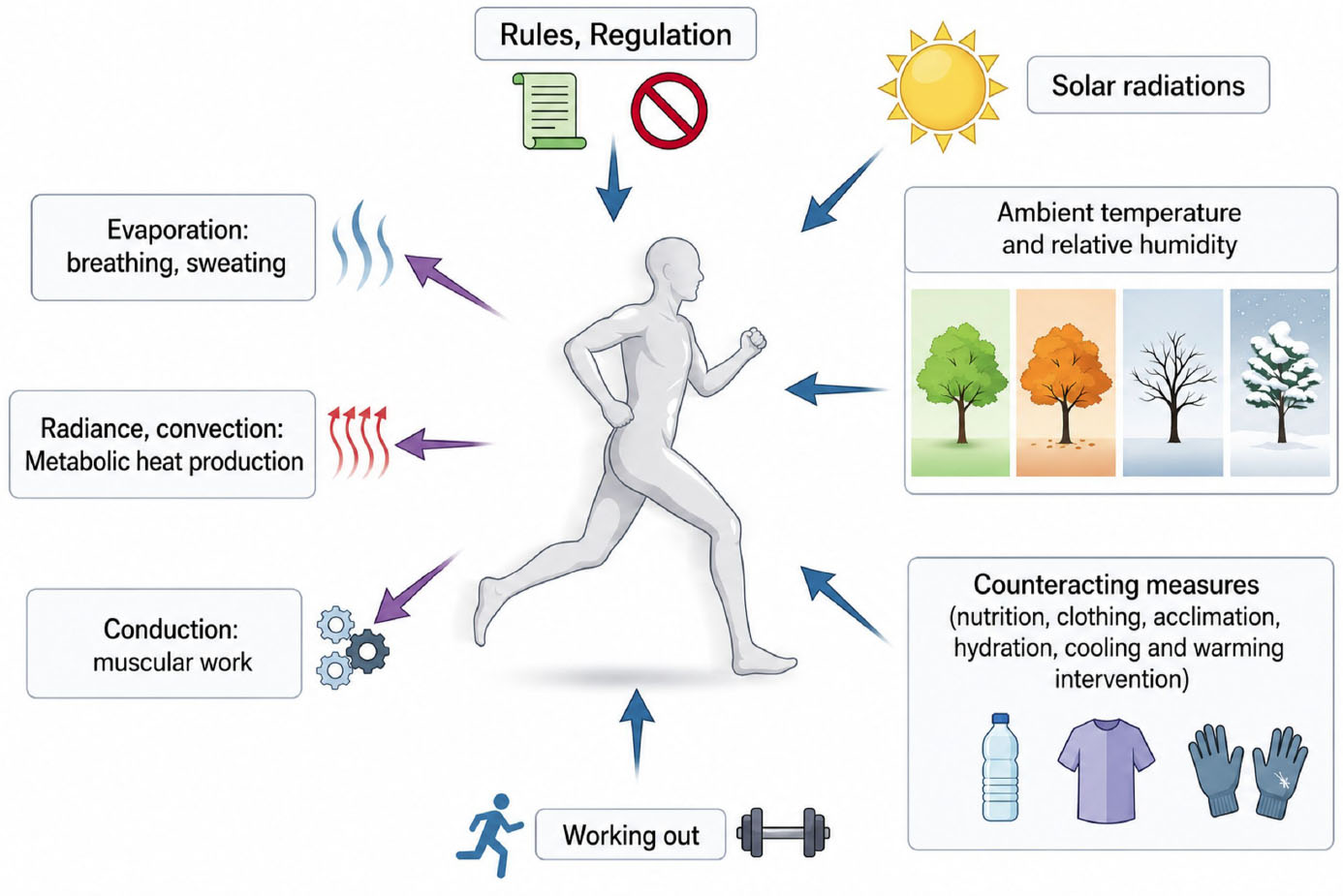
Graphical representation of the main factors impacting exercise and of the principal techniques of countering heat and cold exposure.
3. PRACTICAL APPLICATIONS
When athletes compete in adverse climatic conditions, multifactorial strategies (i.e., training, clothing, hydration, nutrition, acclimatization, and other interventions) are essential for optimizing performance and protecting athlete safety. During training and match preparation, coaches should adapt training loads, recovery strategies, hydration protocols, and substitution planning according to the expected environmental conditions, recognizing that thermal stress may influence not only physical performance but also technical execution, tactical decisions, and overall match intensity. Whenever possible, acclimatization protocols should be incorporated into routine training to prepare athletes for competitions involving substantial environmental stress. These protocols should be individualized according to the expected conditions, the athletes’ previous exposure, the time available before competition, and the training schedule. Multidisciplinary working groups (e.g., coaches, strength and conditioning staff, exercise physiologists, nutritionists, and physicians) should develop and implement standardized procedures tailored to the specific demands of each sport and individual athlete, aimed at maintaining performance and safeguarding athlete safety. Coaches and players should implement individualized hydration plans, structured acclimatization protocols, appropriate clothing selection, targeted cooling or warming interventions, and optimized nutritional strategies. Coaching staff should also adapt player rotation, substitution strategies, warm-up procedures, and recovery protocols according to the expected environmental conditions. This is particularly important during tournaments or congested competition schedules, when repeated high-intensity efforts and limited recovery time may amplify the detrimental effects of thermal stress. To mitigate heat stress, athletes should implement an appropriate, individualized hydration strategy: fluid intake should be planned before, during, and after training or competition, based on expected fluid losses, exercise duration, environmental conditions, and individual tolerance. Cooling strategies, including cold fluids, ice slurry, cooling towels, or other appropriate methods, may be incorporated before exercise, during substitutions, at halftime, during official cooling breaks, and after competition. For example, pre-exercise ingestion of crushed ice has been shown to attenuate thermal strain and preserve working memory performance during repeated-sprint exercise in hot, humid conditions, suggesting a potential benefit for decision-making in intermittent team sports [62]. In cold environments, preparedness should include monitoring wind chill and precipitation in addition to air temperature, as these factors can substantially increase the effective cold stress athletes experience. Players should adopt a layered clothing strategy that protects against low temperatures, wind, and precipitation without restricting movement or impairing technical performance and that can be adjusted across travel, pre-match, match-play, and recovery phases. Substitute players should remain adequately insulated and should perform brief re-warm-up activities before entering the match. Warm-up duration and intensity should be individualized according to the environmental conditions and the athlete, with structured re-warm-up activities implemented during half-time, prolonged stoppages, and before entering or re-entering play [58, 59]. The main strategies to reduce the detrimental effects of exercise in hot and cold environments are summarized in Fig. (2).
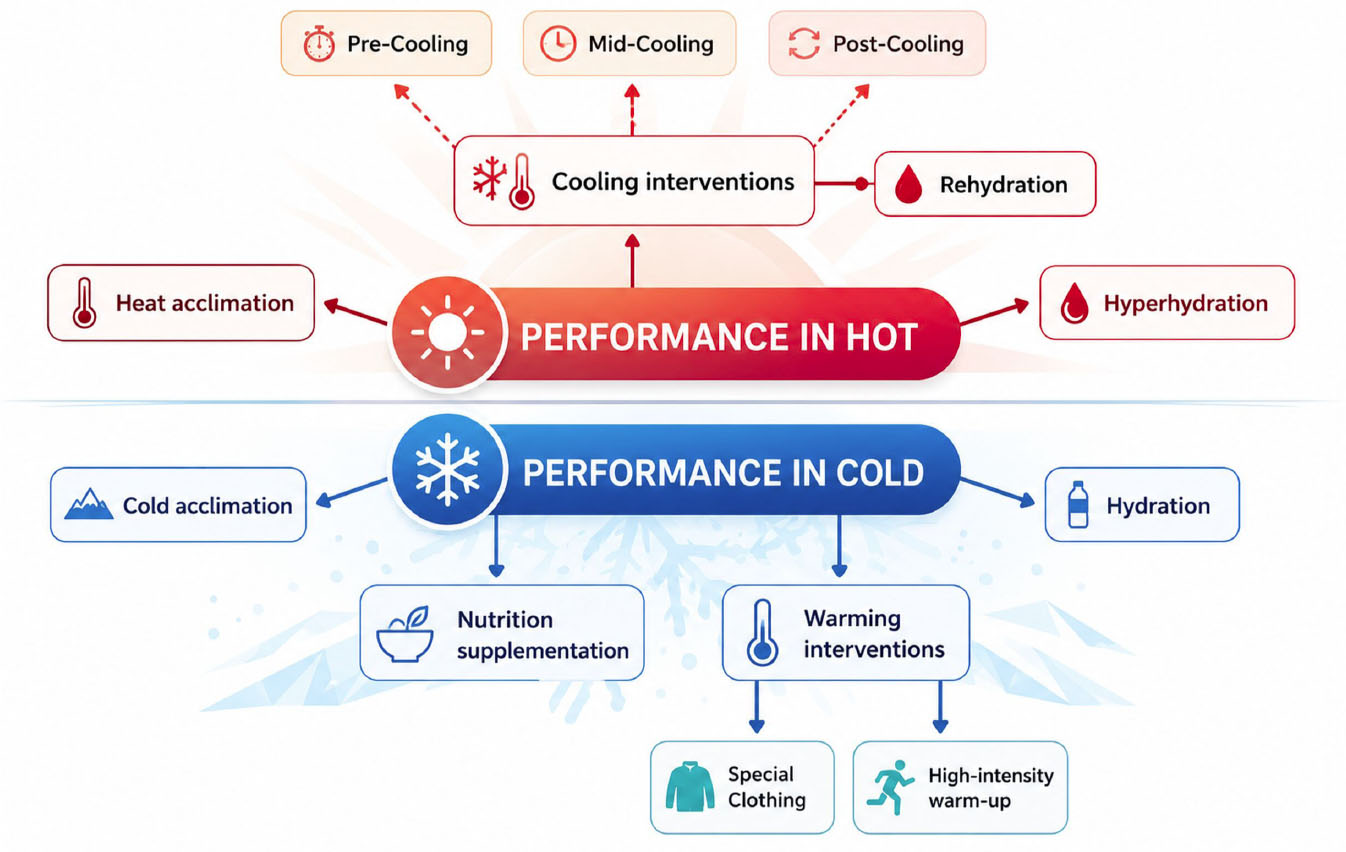
Principal strategies directed to minimize the detrimental impact of exercising in heat or cold conditions.
In this regard, athletes should be adequately prepared to respond to extreme environmental conditions. During competitions in critical environments, health precautions should include experienced medical teams, appropriate equipment, and standardized protocols. The use of dedicated multi-sensor technologies capable of transmitting physiological and performance data in real time has recently been suggested for competitions in heat [7]. Such technological applications could promptly alert coaches and medical staff to declines in performance or emerging health risks, and could also be useful for simulating specific environmental conditions or for better tracking the efficacy of training programs. Moreover, since avoiding heat- or cold-related adverse effects requires preventive measures that should be as personalized as possible, targeted financial investment in sports-medicine technologies may help identify individual vulnerabilities and needs. In this regard, the development of specific, regularly updated guidelines by a panel of experts is desirable. MLS competitions and the recent 2026 FIFA World Cup have provided natural laboratories for understanding adaptations to contrasting environmental stressors. Integrating advanced monitoring technologies and implementing individualized, multidisciplinary management protocols could substantially enhance the performance and safety of elite team-sport athletes.
CONCLUSION AND FUTURE DIRECTIONS
Overall, the evidence presented in this review consistently confirms that environmental conditions are critical determinants of performance, athlete safety, and competitive outcomes in team sports. Exposure to extreme temperatures, whether hot or cold, interacts with CV, metabolic, neuromuscular, and cognitive mechanisms, influencing not only physical capacity, but also decision-making processes and exercise tolerance. These effects may be further amplified by concomitant factors such as humidity, dehydration, and inadequate acclimatization. Importantly, the impact of environmental conditions extends beyond individual physiology, influencing competitive outcomes. Recent findings from the NFL highlight that game-day temperature is predictive of match outcomes when teams from different climatic backgrounds compete, suggesting that environmental familiarity and thermal habituation may translate into a measurable competitive advantage [14]. This finding reinforces the concept that climatic conditions are true contextual factors influencing competitive balance, consistent with previously reported observations in professional soccer and other team sports. From this perspective, the management of heat and cold cannot simply be considered a strategy for preventing injuries or thermally related illnesses; rather, it should be fully integrated into athletic preparation models and tactical planning.
In conclusion, understanding and managing the interaction between environmental stress, physiological responses, and competitive performance is an essential component of modern sports medicine and athletic preparation, with implications extending from individual athletes to the competitive system as a whole. The magnitude of these effects depends on several interacting factors, including air temperature, relative humidity, solar radiation, precipitation, workload characteristics, match duration, acclimatization status, hydration, and individual susceptibility. Therefore, environmental stress should not be considered an isolated physiological challenge but rather an important contextual factor in team-sport preparation and competition. In the context of ongoing global climate change and the increasing internationalization of sports competitions, athletes are likely to face unfamiliar and extreme environmental conditions more frequently. Future research should therefore investigate the relative contributions of climatic background, acclimatization duration, environmental monitoring, and mitigation strategies to team performance, recovery, and match outcomes. Concurrently, greater use of validated real-time monitoring technologies and the development of harmonized, evidence-based guidelines are essential steps toward ensuring optimal and equitable performance while safeguarding athletes' health. Overall, environmental preparation should be integrated into routine training, match planning, substitution decisions, medical supervision, and recovery management. Individualized hydration, cooling, warming, clothing, nutrition, acclimatization, and workload strategies are essential to help athletes maintain performance and reduce the risk of heat- and cold-related illness and injury.
AUTHORS’ CONTRIBUTIONS
The authors contributed to the manuscript as follows: A.P., S.A., S.M.N., V.R., E.C., F.P.: Writing-Original draft preparation; S.V.L., M.P., G.F., L.S.: Writing-Reviewing and Editing. All authors approved the final version of the manuscript.
LIST OF ABBREVIATIONS
| CV | = Cardiovascular |
| FIFA | = Fédération Internationale de Football Association |
| HR | = Heart Rate |
| IL-17 | = Interleukin-17 |
| MLS | = Major League Soccer |
| NFL | = National Football League |
| SV | = Stroke Volume |
| UTCI | = Universal Thermal Climate Index |
| VO2 | = Volume of oxygen consumption |
| VO2max | = Maximal oxygen uptake |
| WADA | = World Anti-Doping Agency |
| WBGT | = Wet-Bulb Globe Temperature |
ACKNOWLEDGEMENTS
Declared none.